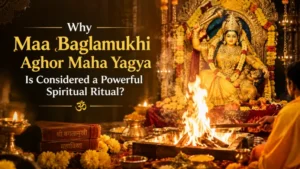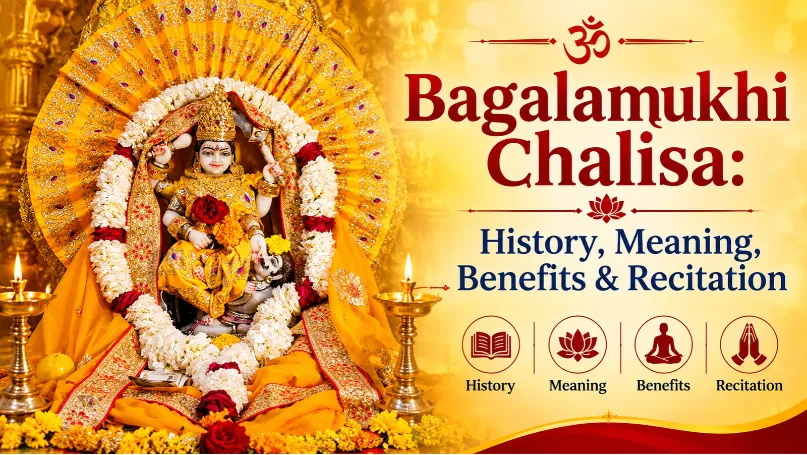
Bagalamukhi Chalisa is a devotional prayer to Maa Bagalamukhi, one of the ten Mahavidyas of the Hindu religion. It comprises of 40 devotional verses that extol the divine power, protective qualities, and power to control the negative forces of the Goddess. The devotees traditionally recite the Maa Bagalamukhi Chalisa to get strength, protection, clarity of mind, and courage during difficult times. Knowing its use, symbolism, and meaning can aid in developing the prayer with confidence and awareness.
Maa Bagalamukhi has a particular significance in Shakta traditions, being the personification of divine power and the ability to manage and transform unpleasant speech and deeds. She is linked to the colour yellow, which is why she is also called Pitambara Devi.
What Is Bagalamukhi Chalisa?
Bagalamukhi Chalisa is a forty-verse devotional composition dedicated to Goddess Bagalamukhi. The word Chalisa is derived from the Hindi word chalis (forty). As in other Chalisas of Hindu devotional literature, it demonstrates praise, devotion, and prayers for the blessings of the Goddess.
Maa Bagalamukhi is traditionally associated with the power of Stambhana, which means restraint or immobilization. This power in devotional interpretations means control of harmful speech, destructive intentions and negative influences.
The Chalisa extols her divine shape and attributes and conveys the faith of the devotee in her power. The heart of the message is surrender, courage, spiritual discipline and seeking God’s guidance in moments of difficulty.
History and Religious Significance of Maa Bagalamukhi
Maa Bagalamukhi is one of the ten Mahavidyas, a group of ten manifestations of the Divine Mother in Shakta Hindu traditions. These manifestations represent different dimensions of divine knowledge, power and spiritual understanding.
She is also known as Pitambara Devi because of her association with yellow garments. Traditional depictions portray her wearing yellow garments and seated on a throne or lotus, often holding a weapon while restraining an adversary.
The Mythological Story of Maa Bagalamukhi
A popular traditional story associates Maa Bagalamukhi’s manifestation with a strong cosmic thunderstorm.
This is a story of a destructive storm that threatened the universe, causing chaos and endangering the natural order. The gods called out for help and Goddess Bagalamukhi appeared from the holy waters of Haridra Sarovar in order to bring balance back.
Her face was a symbol of the strength to halt destructive forces and preserve cosmic order.
Yet another image portrays the Goddess holding a demon’s tongue, an emblem of the ability to tame the tongue and stop destructive speech. This is the imagery that is very much a part of her association with Stambhana Shakti.
These are Hindu religious stories of her that emphasize her role as a divine protector.
Why Is Maa Bagalamukhi Called Pitambara Devi?
Pitambara is connected to yellow clothes. The traditional way to worship Maa Bagalamukhi is by offering yellow flowers, clothes and food.
In various Hindu traditions, yellow is a colour representing knowledge, auspiciousness, spiritual discipline and divine energy. Also, this is connected to the Goddess, making her worship distinctive.
Pitambara Devi is a strong force for the devotees to stay calm, to destroy evil energies and have control over their thoughts, speech, and physical activities.
Meaning and Symbolism of Bagalamukhi Chalisa
Maarag Chalis or Chalisa is not just a bunch of devotional verses. Its themes depict the Goddess’ divine strength and the attributes that people yearn to achieve by worship.
These are some key concepts regarding the symbolism of its term:
- Protection of Divina: The Chalisa extols the Goddess as the force that protects from bad energies and evil intentions.
- Language of the mouth: Her connection to the control of speech represents the need to handle and restrain the tongue from using bitter language, arguments and destructive communication.
- Faith in God’s power and courage: The verses have a message of trust in God’s power and courage, urging worshipers to be courageous and stand strong in the face of challenge.
- Victory over negativity: Her divine power is her ability to overcome bad thoughts, negative influences and obstacles.
- Spiritual discipline: Regular recitation promotes devotion, concentration and discipline in spiritual life.
If these themes are understood, then it makes the prayer more meaningful in that the devotees can relate the symbolism to their thoughts, behaviour, and challenges in their everyday life.
Spiritual Benefits of Reciting Maa Bagalamukhi Chalisa
It is believed that the Bagalamukhi Chalisa when recited with faith, can give spiritual strength and blessings. It is associated with protection and the courage and control of negative influences particularly.
Traditional benefits that are understood include:
- Seeking the protection of God: The devotees say Chalisa to seek Maa Bagalamukhi’s blessings for bad thoughts, negativity and bad situations.
- Building up mental resilience: Prayers and repetition can offer a spiritual practice during stressful or uncertain times.
- Developing the self-control needed to avoid destructive speech: The Goddess’s associations are to think before speaking and to avoid unnecessary arguments.
- Development of courage: By practicing devotions, one could cultivate a strong faith and also emotionally support oneself during personal difficulties.
- Encouraging spiritual discipline: Consistent recitation helps establish a routine of prayer, reflection and devotion.
- When facing challenges: Many devotees seek the blessings of Maa Bagalamukhi when they feel they are faced with challenges, uncertainty or situations where patience and determination is required.
These advantages are based on traditional religious beliefs and experiences of its own devoutness. Recitation is not meant to be seen as a means to dominate others, settle arguments or solve medical, legal or financial issues.
How to Recite Bagalamukhi Chalisa?
The Bagalamukhi Chalisa can be recited as part of a personal devotional routine. Beginners do not necessarily need elaborate arrangements to begin praying with sincerity.
The following steps offer a simple approach:
- Choose a clean and peaceful place: Select a quiet space where you can pray without unnecessary interruptions. If you have a home temple, you can use it for your daily worship.
- Clean yourself before worship: Take a bath or wash your hands and face before beginning the prayer. Wear clean clothes, preferably yellow if you wish to follow the traditional colour association.
- Prepare the puja arrangement: Place an image or idol of Maa Bagalamukhi in your prayer area. You may arrange yellow flowers, a diya and other traditional offerings.
- Begin with a prayer: Sit comfortably, calm your mind and offer your prayers to the Goddess. Take a moment to focus on your intention.
- Recite the Chalisa: Read all forty verses slowly and attentively. Try to understand their meaning instead of rushing through the words.
- Conclude with devotion: Offer a final prayer and express gratitude. You may also sit quietly for a few moments after completing the recitation.
Consistency and sincerity are more important than treating the practice as a mechanical routine.
Best Time to Recite Maa Bagalamukhi Chalisa
Devotees like to recite the Maa Bagalamukhi Chalisa in the early morning after doing their routine. The morning prayer is a quiet time for concentration and devotion.
But the right time is not the same for all the devotees. This decision might be based on individual beliefs and advice given by a trusted spiritual guide. Commonly desired opportunities are:
- The time of early morning is a quiet time for prayer and reflection.
- Thursday is the day of worshiping Guru, and it is also celebrated by some Guru devotees for the Bagalamukhi worship.
- Bagalamukhi Jayanti is an important day, dedicated to the worship of the Goddess.
- In times of trouble, the devotees can resort to the Chalisa for spiritual support and courage.
Bagalamukhi Chalisa vs Bagalamukhi Mantra vs Bagalamukhi Stotra
Although all three are devotional practices associated with Maa Bagalamukhi, their structure and purpose are different.
| Practice | Meaning | Main purpose |
| Bagalamukhi Chalisa | A forty-verse devotional prayer | Praise and devotion |
| Bagalamukhi Mantra | A sacred formula associated with the Goddess | Focused spiritual practice |
| Bagalamukhi Stotra | A hymn praising the Goddess | Devotional worship and glorification |
The Chalisa is generally accessible to devotees who wish to engage in regular prayer. Mantra practices may have specific traditional requirements, particularly in Tantric lineages. Those interested in specialised mantra sadhana should seek guidance from a qualified teacher rather than experimenting with advanced practices independently.
Common Mistakes to Avoid While Reciting Bagalamukhi Chalisa
When devotional practice is done with understanding and honesty, it’s more meaningful. These are some suggestions to remember:
- Hurrying through the verses: The Chalisa should be read at a comfortable speed and it is important to understand its meaning.
- Worship as a quick fix: Do not look for quick fixes for personal issues in worship.
- Reading the symbolism behind the verses: This will help you to connect with Goddess more deeply if you learn the meaning of each verse.
- Do not follow unverifiable rituals: Do not follow particular Tantra practices from random sources online.
- Losing consistency: Pick a prayer schedule that is realistic and not too burdensome.
Conclusion
The Bagalamukhi Chalisa serves as a significant means for devotees to engage with Maa Bagalamukhi and comprehend her connection to the Divine’s protection, strength, and self-control. Each verse reminds us of the value of trust, obedience and calmness in tough times.
As you start your devotional practice or as you carry on your prayer, have the Maa Bagalamukhi Chalisa in mind with all sincerity and with the knowledge of its meaning.
Acharya Suryansh is available for anyone who wants to delve deeper into the spiritual practices of the Hindus and their importance. You can also explore Aghor Maha Yagya to learn more about this sacred spiritual tradition and its associated practices. Continue your spiritual journey with knowledge, faith, and devotion.